
4. Building Your Chemical Inventory From Scratch
If your school has never had a complete inventory, or hasn’t updated one in years, start fresh rather than trying to patch an old list.
Step 1: Assemble the Team
The teacher(s) who use the storage room
A department chair or designated Chemical Hygiene Officer
A district safety officer or risk manager, if one exists
Facilities/custodial staff, since cleaning and maintenance chemicals often share adjacent storage
Step 2: Physically Count Every Container
There’s no substitute for opening every cabinet, shelf, and drawer. For each container, record:
Chemical name (as printed on the manufacturer label)
CAS number (Chemical Abstracts Service number)
Container size and current quantity
Physical state (solid, liquid, gas)
Manufacturer and acquisition date, if known
Storage location (room, cabinet, shelf)
Hazard class (from the label or SDS)
Whether a current SDS exists for it
Step 3: Flag Unknowns Immediately
Any container with a missing, illegible, or purely hand-written label — especially older ones — should be set aside without attempting to identify it by smell, taste, or mixing. Unknowns are handled by a licensed hazardous waste contractor, not school staff.
Step 4: Cross-Reference Against Your Curriculum
Compare the physical inventory against what your current curriculum actually requires. Chemicals left over from discontinued courses are a common source of dead stock and strong disposal candidates.
Step 5: Digitize the Inventory
A spreadsheet can work for a very small program, but most districts outgrow it fast. A dedicated system allows:
District-wide visibility across sites
Automated expiration and re-inspection reminders
Easier hazardous waste generator status tracking, since status is calculated monthly
Faster, more accurate emergency response
Checklist: New Inventory Build-Out
Team assembled and roles assigned
Every storage location physically inspected
Every container logged with CAS number and hazard class
Unknown/unlabeled containers isolated and flagged
Curriculum cross-reference completed
Duplicate or excess quantities identified for consolidation
Expired or unwanted chemicals flagged for disposal
Digital inventory system selected and populated
SDS availability checked against 100% of inventory
District safety officer sign-off obtained
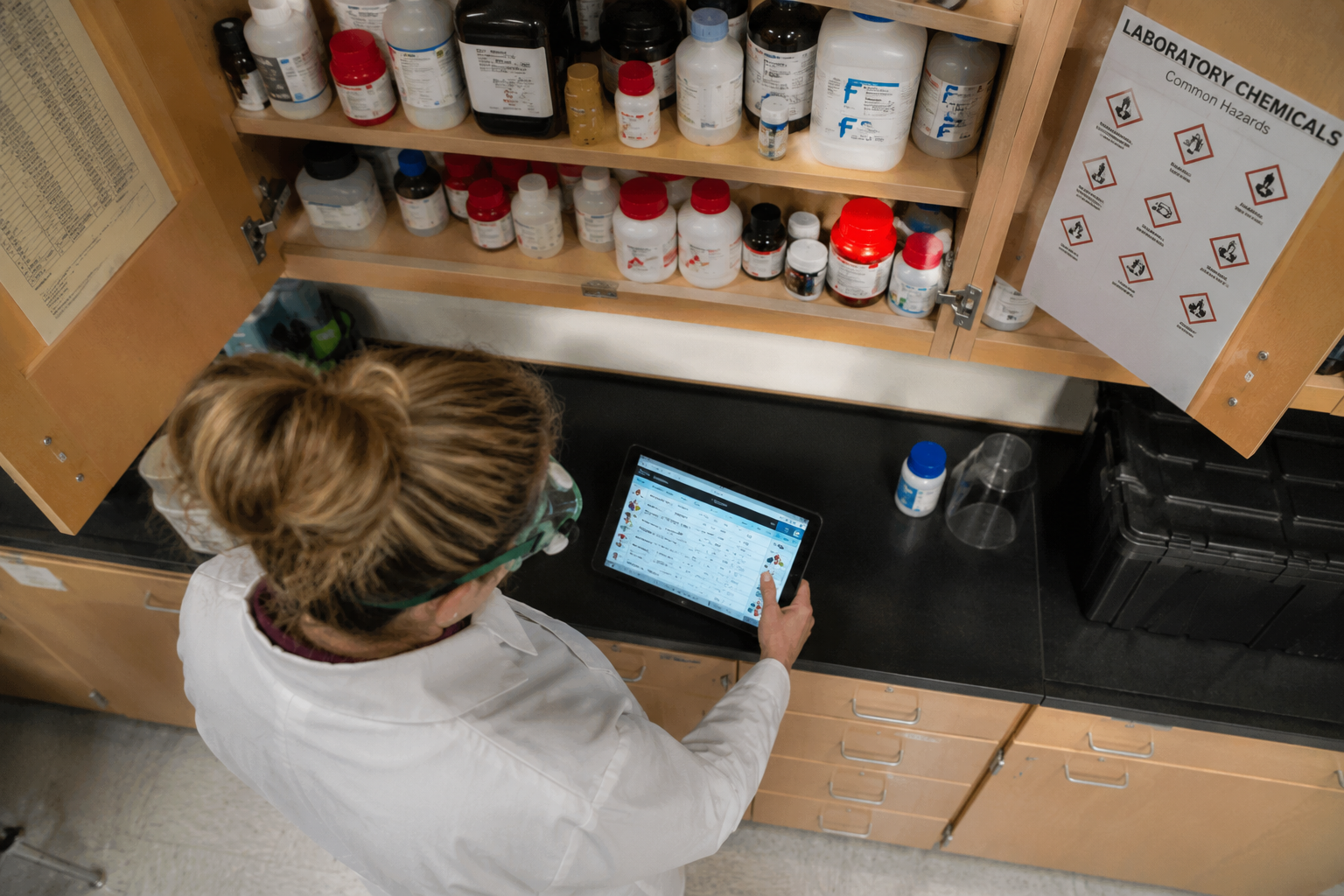
Building a chemical inventory begins with a systematic, room-by-room inspection of every chemical container. Recording accurate information at the source helps establish a complete inventory, improves data quality, and creates the foundation for safer chemical management